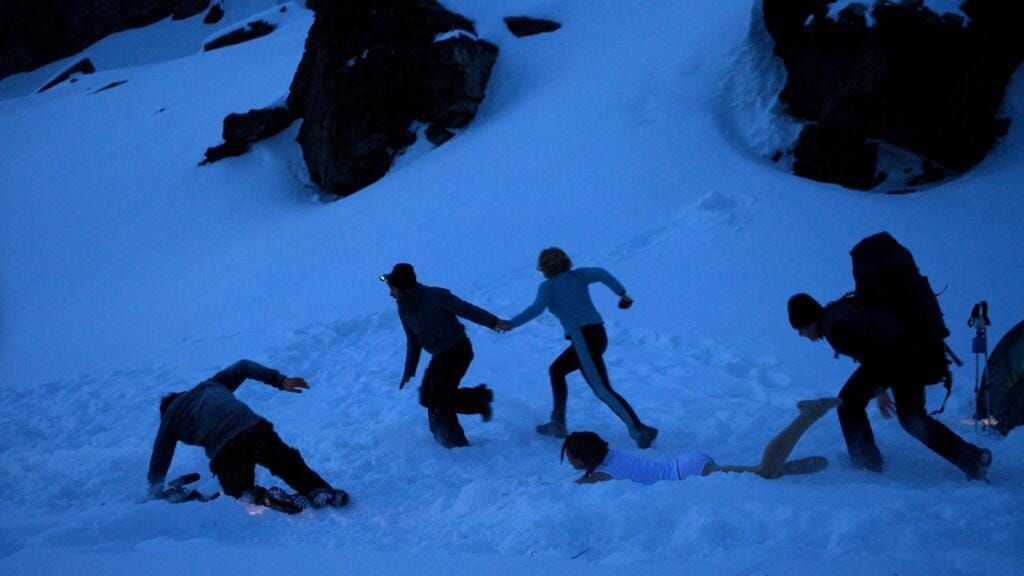
Some mysteries fade away once you learn the facts. The Dyatlov Pass incident is the opposite. The more you read about it, the stranger it gets. More than sixty years later, scientists, investigators, and curious people all over the world are still arguing about what really happened on a frozen mountainside in Russia. So grab a blanket, because this one is genuinely chilling.
A Trip That Was Supposed to Be Fun
In late January 1959, a group of ten experienced hikers set off into the Ural Mountains in what was then the Soviet Union. Most of them were students from a technical university, young and adventurous, and they were led by a 23-year-old named Igor Dyatlov. Their goal was to reach a mountain called Otorten, a tough winter trek that would earn them a top-level hiking certification.
One member, Yuri Yudin, got sick early in the trip and had to turn back. It probably felt like bad luck at the time. As it turned out, it saved his life. He was the only one who ever came home.
The remaining nine pushed on toward the mountains. Their last photos and diary entries show a cheerful group joking around, setting up camp, and trekking through deep snow. They had planned to send a telegram once they returned to civilization. That telegram never came.
When Nobody Came Home
When the hikers failed to return on the expected date, friends and family grew worried, and a search party was sent out. What they found has puzzled people ever since.
High on the slope of a mountain the local Mansi people called Kholat Syakhl — which translates to something like "Dead Mountain" — searchers found the group's tent. But it had been cut open from the inside. The hikers had sliced through the fabric to escape rather than using the entrance, then run out into a freezing, snowy night. Some weren't even wearing shoes.
Footprints in the snow led down the slope toward a forest. There, near the remains of a small fire under a tall cedar tree, searchers found the first two bodies. Over the following weeks and months, the rest of the group was discovered in different spots, some closer to the tent, as if they had been trying to climb back up.
The Details That Don't Add Up
Here is where the mystery deepens. The official cause of death for several of the hikers was hypothermia — they froze in the brutal cold. That part makes sad sense. But a few details have never been fully explained.
Some of the hikers had serious injuries, like broken ribs and a fractured skull, the kind of damage usually caused by a powerful force such as a car crash. Yet there were no obvious wounds on their skin to match. A few of them were found wearing pieces of each other's clothing, suggesting that those who died first had their clothes shared among the survivors trying to stay warm.
And then there is the big question that started it all: why would nine experienced hikers cut their way out of their tent and run into a deadly blizzard, leaving behind the warmth, shelter, and supplies that could have saved them?Something terrified them enough to choose the freezing dark over staying put.
The Theories
Over the decades, people have suggested almost every explanation imaginable.
Some believe an avalanche or a sudden slab of sliding snow forced the group to flee in a panic. For a long time this seemed unlikely because the slope wasn't very steep — but in 2021, scientists used computer models (the same kind once used in the movie Frozen) to show that a small, unusual type of snow slide really could have happened there.
Others point to the harsh weather itself: powerful winds and a phenomenon where cold can cause confusion and even make people feel strangely hot, leading them to behave in ways that don't seem logical.
And of course, there are the wilder ideas — secret military tests, mysterious lights in the sky that other hikers reported that night, or something the local legends warned about. There's no solid proof for these, but they're a big reason the story has stayed so popular.
Why This Mystery Still Grips Us
The truth is, we may never know for certain what happened on Dead Mountain. The avalanche theory is the strongest scientific explanation we have, and it answers a lot of the questions. But it doesn't quite silence the eerie feeling the story leaves behind — nine young people, full of life, who vanished into the snow and left a puzzle the world is still trying to solve.
Maybe that's exactly why we keep coming back to it. The Dyatlov Pass reminds us that even in a world full of science and answers, there are still a few corners of it that stay wonderfully, hauntingly mysterious.
What do you think really happened that night? Tell me in the comments below.
Member discussion: